


Language
The Complete Guide to Learning Japanese
From Zero to Fluent
Language
The Complete Guide to Learning Japanese
From Zero to Fluent
Loading
You don't need to be an anime obsessive to learn Japanese — but millions of people are, and that's a great reason to start. Every day, students across the Americas open a Japanese textbook, practice their first Hiragana characters, or book a one-way ticket to Tokyo. Some want to study at a Japanese university. Others need Japanese for a career in tech, translation, or international business. And plenty just want to understand their favorite shows without waiting for subtitles.
Whatever brought you here, this guide gives you the roadmap. We'll walk through every step — from writing your first Hiragana character to sitting the JLPT N3 exam — with specific resources, realistic timelines, and strategies that actually work. No vague advice. No "just watch anime and you'll learn!" hand-waving. Just a clear plan built from what real learners have done before you.
By the end of this guide, you'll know exactly how to learn Japanese efficiently, what to study at each stage, and how to measure your progress. Let's get started.
Japanese is no longer a "niche" language. Japan's cultural influence — from anime and manga to technology and cuisine — has made Japanese one of the most studied languages in North and South America. But the reasons to study Japanese go far deeper than pop culture.
Career opportunities. Japan is the world's fourth-largest economy and a global leader in automotive, robotics, electronics, and gaming. Companies like Toyota, Sony, Nintendo, and SoftBank actively seek bilingual employees. Adding Japanese to your resume opens doors at multinational corporations, government agencies, and startups expanding into the Asian market.
Academic advantages. Japanese universities like the University of Tokyo, Waseda, and Keio run world-class programs for international students. The Japanese government offers generous scholarships — the MEXT scholarship covers tuition, living expenses, and flights. Thousands of students study in Japan each year, and many programs welcome beginners with zero prior Japanese knowledge.
Cognitive benefits. Japanese's three writing systems and completely different grammar structure challenge your brain in ways that Romance languages can't. Learning Japanese builds pattern-recognition skills, improves memory, and develops the kind of mental flexibility that makes learning other languages easier down the road.
Cultural access. Speaking Japanese lets you engage with the culture directly — reading manga in the original, understanding anime dialogue without subtitles, navigating Tokyo with confidence, and having real conversations with Japanese friends. That depth of connection is something no translation can replicate.

Before you dive into studying Japanese, it helps to understand what you're getting into. Japanese belongs to the Japonic language family. Its exact origins are debated, and it has no confirmed relationship to Chinese, Korean, or any other major language family — though it shares grammatical similarities with Korean.
Three writing systems. Japanese uses three scripts simultaneously: Hiragana (ひらがな) for native Japanese words and grammar, Katakana (カタカナ) for foreign loanwords and emphasis, and Kanji (漢字) — Chinese characters — for the core content words. This sounds overwhelming, but you learn them one at a time, and each serves a clear purpose.
Sentence structure: Subject-Object-Verb. English follows Subject-Verb-Object order ("I eat rice"). Japanese follows Subject-Object-Verb ("I rice eat"): 私はご飯を食べます (watashi wa gohan o tabemasu). The verb always comes last, and particles mark each element's role in the sentence.
Agglutinative grammar. Japanese is agglutinative, meaning you build meaning by stacking endings onto verb stems. Think of it like Lego blocks: you start with a root verb and snap on pieces to indicate tense, politeness, negation, and potential. Once you understand the block system, grammar becomes mechanical rather than mysterious.
Pitch accent. Unlike Mandarin's four tones, Japanese uses pitch accent — the pitch pattern of a word changes depending on where the accent falls. For example, はし (hashi) can mean "chopsticks" (high-low) or "bridge" (low-high) depending on pitch. It's subtler than tonal languages, but worth paying attention to from the start.
If you take only one piece of advice from this guide, let it be this: learn Hiragana and Katakana before anything else. Do not spend weeks relying on Romaji — Japanese written in English letters. Romaji is inconsistent, hides pronunciation details, and prevents you from reading real Japanese text. Commit to the Japanese scripts from day one.
Hiragana — 46 basic characters. Hiragana is the foundation of Japanese writing. Every Japanese word can be written in Hiragana, and it's used for native words, grammar particles, and as pronunciation guides (furigana) above Kanji. The basic characters are:
Each character also has dakuten (voiced) and handakuten variants: が (ga), ざ (za), だ (da), ば (ba), ぱ (pa), and so on. Including these, you're looking at about 100 characters total — very manageable in one to two weeks.
Katakana — 46 characters for foreign words. Katakana has the same sounds as Hiragana but uses different, angular character shapes. It's used for loanwords from other languages (コーヒー, kōhī — "coffee"), scientific terms, onomatopoeia, and emphasis (like italics in English). Don't skip Katakana — it appears everywhere in Japanese text, from restaurant menus to street signs.
Mnemonic techniques. The most effective way to memorize Hiragana and Katakana is through visual mnemonics. The character あ (a) looks like a person bowing with an arm extended. The character メ (me, "eye") looks like an eye. Create vivid associations for each character, write them repeatedly, and test yourself daily. Most learners master both scripts within 7–14 days of focused practice.
Japanese Ammo with Misa's Hiragana tutorial is one of the most popular resources for beginners — clear, well-paced, and packed with memory tricks. Work through it with a notebook, practice writing each character, and you'll be reading Japanese text within a week.
Once you've got the basics, deepen your skills with our guide to mastering Hiragana and Katakana in your first week for targeted practice exercises and common pitfalls to avoid.
With Hiragana and Katakana under your belt, it's time to stock your mental dictionary. The good news: you don't need to memorize 10,000 words to hold a conversation. Research shows that the first 500 words in Japanese cover roughly 60% of everyday conversation. The first 1,000 words push that to about 80%. Focus on frequency, not volume.
Wasei-eigo — your secret weapon. Japanese is full of "Japanese-made English" words (和製英語, wasei-eigo) — loanwords adapted from English. These give English speakers a massive head start: マンション (manshon) means "apartment," コンビニ (konbini) means "convenience store," アルバイト (arubaito) means "part-time job," and スマートフォン (sumātofon) means "smartphone." You already know hundreds of Japanese words — you just need to recognize them in their Japanese form.
Start with these categories:
Spaced repetition is non-negotiable. Your brain forgets on a predictable curve. Spaced repetition systems (SRS) fight that curve by showing you words right before you'd forget them. Anki is the most powerful free SRS tool — download a shared Japanese frequency deck or build your own from words you encounter. Wani Kani is excellent for Kanji-specific learning (more on that below). Either way, spend 15–20 minutes daily on vocabulary review. Consistency beats intensity.
Japanese grammar has a reputation for being difficult. It's not — it's just different. Once you internalize the core patterns, everything else builds on them. Let's break down the foundations.
SOV sentence structure. As mentioned, Japanese puts the verb at the end. "I eat rice" becomes 私はご飯を食べます (watashi wa gohan o tabemasu). The topic/subject (私は) comes first, the object (ご飯を) second, and the verb (食べます) last. This takes practice, but your brain adjusts within a few weeks of consistent exposure.
Particles — the glue of Japanese sentences. Japanese uses particles (small markers attached to words) to indicate grammatical function. These are the ones you'll encounter first:
The distinction between は (topic) and が (subject) is one of the most famously tricky aspects of Japanese grammar. Don't worry if it doesn't click immediately — it takes months of exposure. Start by using は as your default and learn が patterns gradually.
Verb groups and conjugation. Japanese verbs fall into three groups, and each conjugates differently:
Key conjugation forms:
Adjective types. Japanese has two adjective types that conjugate differently:

For grammar practice that adapts to your level, Bunpro is the best tool available — it uses spaced repetition specifically designed for grammar points, not just vocabulary. Pair it with Tae Kim's Guide to Learning Japanese (free online) for thorough explanations of every grammar concept.
Kanji is the mountain every Japanese learner must climb. There are roughly 2,000 "jōyō kanji" (常用漢字) — the characters needed for basic literacy in Japanese. Each one has multiple readings and a unique meaning. It's a lot. But it's doable with the right strategy.
Why Kanji matters. You cannot read Japanese without Kanji. Newspapers, signs, menus, textbooks — they all use Kanji extensively. While Hiragana and Katakana handle grammar and foreign words, Kanji carries the meaning of content words. Skipping Kanji means staying illiterate in Japanese, no matter how good your speaking is.
Radicals and components. Every Kanji is built from smaller components called radicals. For example, the character 休 (rest) is made of 人 (person) + 木 (tree) — a person leaning against a tree to rest. By learning the ~200 most common radicals, you can break any Kanji into manageable, memorable pieces. This is the key insight that makes Kanji learning feel possible rather than impossible.
Learning methods:
Realistic timeline. Learning 10–15 new Kanji per day with spaced repetition, you can cover all 2,000 jōyō Kanji in 6–12 months. The key is daily review — missing days causes backlogs that feel overwhelming. Start with the most frequent characters first (Wani Kani and Anki frequency decks do this automatically) so you can start reading real text quickly.
For a deeper strategy, read our ultimate Kanji learning strategy guide — it compares every major method and gives you a personalized plan based on your learning style and timeline.
You can read Japanese perfectly and still freeze when a native speaker talks at full speed. That's normal. Listening and speaking are separate skills that need dedicated practice — not just a byproduct of reading and grammar study.
Japanese pronunciation is straightforward. Compared to Mandarin tones or Korean tense consonants, Japanese pronunciation is one of the easiest aspects for English speakers. The vowel system has just five pure vowels (a, i, u, e, o), and consonants are generally similar to English. The main challenge is the pitch accent system — certain words change meaning based on pitch pattern — but this is subtler than full tonal systems and improves naturally with listening exposure.
The shadowing technique. Shadowing means listening to native Japanese audio and repeating it aloud simultaneously — like a shadow following its source. This builds pronunciation, rhythm, and intonation at the same time. Start with slow, clear audio (textbook dialogues or beginner podcasts) and gradually increase speed. Even 10 minutes of daily shadowing produces noticeable improvement within a month.
Language exchange apps. Once you have basic sentences down, start talking to real people. HelloTalk and Tandem connect you with Japanese speakers who want to practice English — a fair trade for both sides. italki offers affordable one-on-one tutoring with native Japanese teachers (typically $10–20/hour). Set up a weekly conversation session. At first, you'll stumble. By month three, you'll hold basic conversations. By month six, you'll surprise yourself.

Listening resources by level:
Reading and writing solidify everything you've learned. They force you to process Japanese actively rather than passively, and they expose you to grammar and vocabulary in context.
Graded readers. Don't jump into a Japanese newspaper on day one. Begin with materials designed for learners. Tadoku (多読, "extensive reading") is a method that uses graded readers organized by level. Start with Level 0 books (all Hiragana, simple pictures) and work up gradually. The Tadoku Free Books website offers hundreds of free graded readers in PDF format.
Reading manga. Manga is one of the most enjoyable ways to build reading fluency. The visual context helps comprehension, and the language is natural and conversational. Start with slice-of-life manga (simpler language) before tackling fantasy or sci-fi (which use made-up vocabulary and elaborate Kanji). Popular beginner-friendly titles include よつばと! (Yotsuba&!) and 白熊カフェ (Polar Bear Cafe).
Writing practice. Keep a Japanese journal — even 3–5 sentences daily. Write about your day, your plans, or what you ate. Use vocabulary and grammar patterns you've recently learned. Apps like Jisho.org (the best free Japanese-English dictionary) and Takoboto (Android) help you look up words and see example sentences.
If you want a concrete milestone for your Japanese learning, aim for the JLPT — Japanese Language Proficiency Test. It's the internationally recognized certification that Japanese universities, employers, and government agencies use to measure language ability. Unlike the TOPIK for Korean, the JLPT has no speaking or writing section — it tests vocabulary, grammar, reading, and listening.
Five levels:
Exam structure. Each level tests three sections: Language Knowledge (vocabulary/grammar), Reading Comprehension, and Listening. The exam is administered twice per year (July and December) at testing centers worldwide. N5 and N4 are offered in both windows; N1–N3 are typically December only.
Study timeline (realistic estimates):

Test day tips. Register early — popular testing centers fill up fast. Bring your passport and a pencil. The reading section is the most time-pressured at higher levels; practice with timed mock exams. For listening, train your ears with Japanese media daily in the weeks before the test — don't cram.
For a structured JLPT preparation plan, see our complete JLPT N5–N3 study plan with week-by-week schedules and recommended practice materials.
Let's be honest: most people who learn Japanese do it partly because they love Japanese media. The trick is turning passive entertainment into active learning. Watching anime with English subtitles is fun — but it won't make you fluent. Here's how to use media effectively.
The anime study method. Pick a scene (2–3 minutes long). Watch it once with English subtitles for context. Watch it again with Japanese subtitles, pausing to look up unfamiliar words. Watch it a third time without subtitles, shadowing the dialogue aloud. Repeat with a new scene daily. This turns 30 minutes of anime-watching into a powerful listening and vocabulary session.
Important caveat: anime Japanese ≠ real Japanese. Anime characters use exaggerated speech patterns, casual language, and made-up expressions that sound strange in real conversation. Use anime for listening practice and vocabulary building, but supplement with resources that teach natural, everyday Japanese — like Japanese dramas, variety shows, and YouTube channels from native speakers.
Recommended content by level:
J-pop and J-rock lyrics. Print out the Japanese lyrics to your favorite songs. Look up every word you don't know. Sing along. Music uses repetitive choruses, which means you'll hear the same vocabulary dozens of times — perfect for memorization. Artists like Yorushika, YOASOBI, and King Gnu use rich, poetic language that expands your vocabulary beyond textbook Japanese.
We go deeper on this approach in our article on learning Japanese through anime — including a printable study template you can use with any show.
No amount of app-based study replaces being in Japan. When you study Japanese in Japan, every moment becomes a learning opportunity — ordering food at a konbini, asking for directions at the station, chatting with classmates, reading train signs. Your brain switches from "study mode" to "survival mode," and progress accelerates dramatically.
Choosing a language school. Japan has excellent language schools designed for international students:
University exchange programs. If you're enrolled at a university, check whether they have an exchange partnership with Japanese institutions. The MEXT scholarship program is incredibly generous — it covers tuition, provides a monthly stipend, and even pays for flights. Programs range from one semester to a full degree.
Daily immersion habits. Once you're in Japan, maximize your exposure:
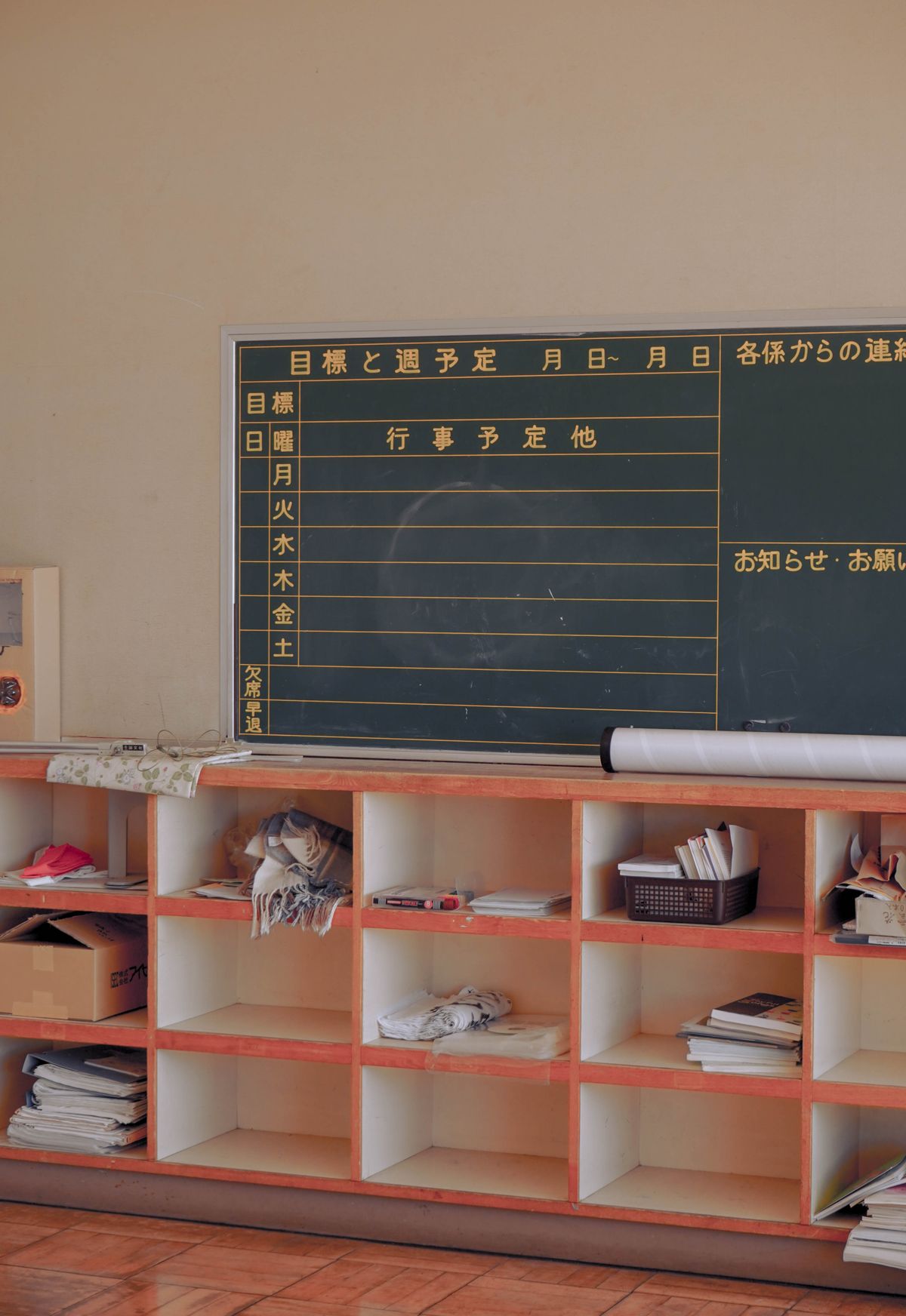
Polite Japanese (Keigo). Once you're in Japan, you'll quickly notice that the Japanese you learned from textbooks sounds different from what people actually say in formal situations. Japanese has an elaborate politeness system called 敬語 (keigo) that changes verb forms, vocabulary, and even sentence structure depending on who you're speaking to. As a learner, focus on 丁寧語 (teineigo) — the polite form with 〜ます/です endings — as your default. You can learn the more formal 尊敬語 (sonkeigo) and 謙譲語 (kenjōgo) as you advance. Our guide to keigo and polite Japanese breaks down all three levels with practical examples.
If Japan isn't your only interest, explore our guides to studying in South Korea and studying in Taiwan — both offer incredible language immersion experiences with their own unique advantages.
You don't need to spend hundreds of dollars on Japanese courses. The best resources are free or low-cost:
Top free resources:
Best apps:
Your 12-month study plan:
Consistency is everything. Thirty minutes every day beats three hours on weekends. Your brain needs daily exposure to build and retain the neural pathways that make Japanese feel natural.
Ready to start? We've put together a free 12-month Japanese study plan that breaks down exactly what to study each week — from your first Hiragana character to JLPT N3 preparation.
The PDF includes:
Download the Free Study Plan (PDF)
Whether you're planning to study abroad in Japan, preparing for the JLPT, or simply falling in love with the language — this plan gives you the structure you need. Print it out, stick it on your wall, and check off each week as you go.
Your Japanese journey starts with a single character. Learn Hiragana today, and by this time next year, you'll be having conversations you never thought possible. 頑張ってください! (Ganbatte kudasai! — "Do your best!")
The U.S. Foreign Service Institute estimates about 2,200 class hours for English speakers to reach professional proficiency in Japanese — making it one of the most time-intensive languages for English speakers. But "learn Japanese" means different things to different people. With consistent daily study (1–2 hours), you can hold basic conversations in 6–12 months, reach intermediate fluency (JLPT N3) in 18–24 months, and approach advanced proficiency in 3–4 years. Your timeline depends on your study intensity, immersion opportunities, and whether you've learned other Asian languages before.
Japanese is often considered the hardest of the three for English speakers, primarily because of its three writing systems (Hiragana, Katakana, and Kanji). Korean has a simpler writing system (Hangul) but harder pronunciation. Chinese has thousands of characters (like Kanji) but simpler grammar — no conjugation, no particles, no honorifics. Each language has its own challenges. The "hardest" one is whichever you're least motivated to study — pick the language that excites you most, and it will feel easier.
For basic literacy in Japanese, yes — the 2,000 jōyō Kanji are the characters needed to read newspapers, signs, and most everyday text. The JLPT N1 requires knowledge of all ~2,000. For conversational fluency without reading, knowing 500–800 Kanji is sufficient for daily life. Most learners find that once they hit about 1,000 Kanji, they can read most manga and simple articles with a dictionary. The investment pays off quickly.
For Kanji, Wani Kani is the gold standard — its spaced repetition and mnemonic system are specifically designed for Japanese characters. For grammar, Bunpro is unmatched — it uses SRS for grammar points organized by JLPT level. For structured lessons, LingoDeer outperforms Duolingo because it was built for Asian languages. For vocabulary, Anki is free and infinitely customizable. For speaking practice, italki connects you with affordable native tutors. No single app covers everything — combine 2–3 tools for best results.
Yes. Many language schools in Japan accept complete beginners — you'll start from Hiragana on day one. English-taught university programs exist at institutions like Waseda, Sophia, and Ritsumeikan. And the MEXT scholarship welcomes applicants with no prior Japanese study. However, learning basic Japanese before arriving dramatically improves your experience. Even reaching N5 level (3 months of study) makes daily life in Japan significantly easier and more enjoyable. Check our Japanese language programs for current options.
It depends on your goals. If you're drawn to Japanese culture, career opportunities in Japan, or plan to study in Japan, start with Japanese. If Korean culture or career prospects in Korea motivate you more, start with Korean. The good news: learning either one makes the other easier. Both share SOV grammar structure, similar honorific concepts, and significant Chinese-derived vocabulary. If you want both, pick the one that excites you more — motivation matters more than linguistic "order."
Anime is a great supplement but a poor foundation. Anime characters use exaggerated speech patterns, casual language, and expressions that sound unnatural in real conversation. Use anime for listening practice, vocabulary building, and motivation — but pair it with structured grammar study, textbook dialogues, and real-world conversation practice. Our guide to learning Japanese through anime shows you how to turn your favorite shows into effective study sessions.
Get a detailed 12-month study plan to reach your language goals


